Wednesday, November 23, 2011

Ask and Answer Questions About Ebooks and Ereaders [Help Yourself]

Ask and Answer Questions About Ebooks and EreadersEvery day we're on the lookout for ways to make your work easier and your life better, but Lifehacker readers are smart, insightful folks with all kinds of expertise to share, and we want to give everyone regular access to that exceptional hive mind. Help Yourself is a daily thread where readers can ask and answer questions about tech, productivity, life hacks, and whatever else you need help with.

Ereaders look to be this holiday's hot gift, but there are so many options for ereader hardware that it can be tough to pick a platform. The Amazon Kindle Fire and the Barnes & Noble Nook Tablet were both just released, and there are a dozen other models to choose from. Ask and answer questions about ereader hardware and the ebooks you read on them in the comments.

Source: http://feeds.gawker.com/~r/lifehacker/full/~3/yP1dWCi9qhM/ask-and-answer-questions-about-ebooks-and-ereaders

tim tebow kelly ripa reno wildfire reno wildfire osu osu reno news

Hezbollah, Iran uncover CIA informants (Reuters)

WASHINGTON (Reuters) ? In an apparently serious setback for U.S. intelligence against a key adversary, Hezbollah, the Lebanese Shi'ite militia, has succeeded in identifying and arresting informants within its ranks who were working for the CIA, current and former U.S. officials said.

Separately, counterintelligence officers in Iran also succeeded in uncovering the identities of at least a handful of alleged CIA informants, the officials said.

Some former U.S. officials said that the CIA informants, believed to be local recruits rather than U.S. citizens, were uncovered, at least in part, due to sloppy procedures - known in the espionage world as "tradecraft" - used by the agency.

But Bob Baer, a former CIA operations officer whose books inspired the Hollywood movie Syriana, said that Hezbollah's counterintelligence capabilities are formidable and should not be underestimated.

"Hezbollah's security is as good as any in the world's. It's the best. It's better than that of the KGB," the former Soviet spy agency, Baer said.

Hezbollah, founded with Iranian help during Lebanon's 1975-1990 civil war, has grown from a militia that fought Israeli forces in south Lebanon into the most powerful political and military force in the country. Hezbollah and its allies dominate the Lebanese government formed in June.

Baer said one reason Hezbollah has been successful in rooting out spies is that it is so powerful it has forced Lebanese government security forces to hand over sensitive communications and spy gear supplied by the U.S. government. Hezbollah then used this U.S. equipment to identify and track down CIA informants.

U.S. officials were coy about the extent and seriousness of CIA losses. But they said damage to U.S. intelligence was serious enough for extensive briefings and discussions to have been held with congressional oversight committees. A congressional source said any discussions remain classified.

Hezbollah, which the U.S. government labels a terrorist group, and Iran, which it accuses of developing a nuclear weapon and sponsoring attacks on U.S. troops in Iraq, are major targets of interest for U.S. spy agencies and the White House.

There was no word about the unmasked operatives' fate.

The CIA declined to comment on the latest developments. Agency spokesman Preston Golson said the CIA "does not, as a rule discuss allegations of operational activities."

However, U.S. officials explicitly denied a claim, reported by the Los Angeles Times on Monday, that CIA operations in Lebanon have effectively been crippled due to Hezbollah's

actions.

Nonetheless, U.S. officials confirmed to Reuters that some CIA informants assigned to gather information on Hezbollah and the government of Iran had been compromised, and that any such losses are considered damaging to U.S. intelligence collection efforts.

'EXTREMELY COMPLICATED ENEMY'

"Espionage has always been a perilous business. Collecting sensitive information on adversaries who are aggressively trying to uncover spies in their midst will always be fraught with risk," said one U.S. official, speaking on condition of anonymity.

The official acknowledged: "Hezbollah is an extremely complicated enemy. ... It's a determined terrorist group, a power political player, a mighty military, and an accomplished intelligence organization formidable and ruthless. No one underestimates its capabilities."

During the past year, leaders of both Hezbollah and Iran have publicly touted what they said were successes by their security and counterintelligence forces in uncovering CIA informants.

In June, Hezbollah leader Sheikh Hassan Nasrallah said two of the group's members had been arrested on suspicion of being affiliated with the CIA, and a third was held for working either for the CIA or for European or Israeli intelligence agencies.

In May, Iran's intelligence minister said more than two dozen spies for the United States and Israel had been uncovered. ABC News reported that Iranian TV had broadcast what the U.S. network described as accurate video of websites used by the CIA.

A former U.S. intelligence official who worked in the region said U.S. operatives have been "battling for most of the last decade" in a shadow war with what he described as Hezbollah's extremely effective counterintelligence operatives.

Over the years, Hezbollah has proven persistent, and sometimes successful, both in spotting CIA informants within its ranks and in trying to plant its own double agents on the CIA, the former official said.

One frequent tactic used by the group, the former official said, is to send "walk-in" operatives into U.S. embassies in Middle Eastern and Mediterranean countries claiming to have information about attacks being planned against U.S. targets.

Instead of having information about real attack planning, however, the "walk-ins" use their visits to U.S. embassy buildings to gather information about embassy security measures and procedures which could then be used to plan possible attacks, according to the former official.

(Editing by Warren Strobel and Mohammad Zargham)

(Email: mark.hosenball@thomsonreuters.com)

Source: http://us.rd.yahoo.com/dailynews/rss/world/*http%3A//news.yahoo.com/s/nm/20111121/wl_nm/us_cia_hezbollah

legarrette blount pharrell pharrell kellie pickler silver bullet joshua komisarjevsky russell simmons

AP source: BYU, Big East end negotiations (AP)

A person familiar with the negotiations tells The Associated Press that negotiations between the Big East and Brigham Young have broken off and the school will not be joining the conference.

The person spoke Tuesday on condition of anonymity because the conference and school have not been making their talks public.

The Big East was trying to add BYU as part of its plan to expand westward and become a 12-team football league.

At issue are television rights. The person says BYU wanted to retain the rights to its home football games and the league could not agree to that.

No other school in major college football playing in a conference has such a deal.

Source: http://us.rd.yahoo.com/dailynews/rss/sports/*http%3A//news.yahoo.com/s/ap/20111123/ap_on_sp_co_ne/fbc_big_east_byu

gabrielle giffords austin rivers austin rivers ows kindle fire review community newt gingrich

Tuesday, November 22, 2011

Economic woes dampen demand at Burgundy auction (Reuters)

BEAUNE, France (Reuters) ? A sale of Burgundy wine at the world's biggest charity auction Sunday drew lower bids than in previous years as economic jitters hit home.

The sale of the so-called President's Lot is a highlight of the annual "Hospices de Beaune" auction, at which rich wine enthusiasts bid for fine Burgundy wines in a yearly sale whose proceeds are donated entirely to charity.

But economic worries crimped enthusiasm at Sunday's sale. Most auctioned bottles drew less than their expected bids, while the President's Lot -- a 460-liter barrel -- raised 110,000 euros, a steep drop from the 400,000 euros it raised last year.

"This year's auction takes place in a difficult financial and economic context," said Alain Suguenot, chairman of the hospices and mayor of Beaune, home to a striking medieval-era hospice in the midst of wine-growing country.

The auction is a meeting place for jet-setting millionaires and wine trades set on obtaining quality wines and funding charitable organizations.

Fashion figure Ines de la Fressange and comic film actor Christian Clavier presided over the sale of the special lot according to the traditional candle-flame method -- where bidding continues until the flame dies.

The revenue goes to the French Alzheimer's disease research association and a charity that funds cardiac surgery in France for children from poor countries.

The wines are from the 2011 harvest and will need to mature for a few years before they are ready for drinking.

"This vintage is the best of the century," said Claude Chevallier, president of the Burgundy vintners association. "That makes it the 11th in a row," he added.

Louis-Fabrice Latour, head of Burgundy's wine merchant group, said he expected the Burgundy prices in 2012 to be stable to slightly lower due to the financial crisis.

ALOXE-CORTON

This year the President's Lot was a Corton Clos du Roi Cuvee Baronne du Bay, named after the daughter of Jean-Louis Peste, a doctor at the hospice for 30 years in the 19th century.

In 1924, when she was alive, she donated vineyards to the hospital on the Aloxe-Corton hillsides. Over 45 percent of this Grand Cru terroir is planted with 37-year-old Pinot vines.

Clavier, born in 1952, is best known for his role in "The Visitors," a French film in which a group of medieval people are lost in modern times.

Aristocrat Fressange is a former top model and is well-known in France's fashion scene. She consults for fashion designer Jean-Paul Gaultier and still works occasionally as a model, gracing the catwalk at Chanel's 2011 spring-summer show at the age of 53.

Aside from the President's Lot, the general hospices bidding is for lots of 228 litres of wine in barrels that can be transformed into 288 standard bottles. The wine is from the 2011 harvest and has to stay in barrels for at least two years.

The wines are among the best and most expensive of Burgundy, France's second-biggest wine-making area after Bordeaux.

The auction, by Christie's, still takes place in the medieval building but telephone lines and Internet connections allow bidders to participate from all over the world.

Source: http://us.rd.yahoo.com/dailynews/rss/world/*http%3A//news.yahoo.com/s/nm/20111120/lf_nm_life/us_france_wine_burgundy

statue of liberty gold rush alaska gold rush alaska the addams family blue bloods temple grandin texas rangers

Moronic Municipal Workers In Texas Think Three-Digit Passwords Are Secure [Wtf]

Last week, we reported that the systems which control the Illinois water supplies were hacked. Over the weekend another similar attack happened in Texas. But this one was possible because the password was just three digits long. That's pretty terrifying. More »


Source: http://feeds.gawker.com/~r/gizmodo/full/~3/FZRzKDOFgq4/moronic-municipal-workers-in-texas-think-three+digit-passwords-are-secure

rambus rambus pabst blue ribbon pabst blue ribbon mac miller omarion gabby

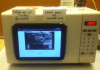
TouchPad Microwave Hack Finds Videos That End Right When The Popcorn Is Ready

uwaveYour better half is off doing things more important than making you food. Looks like it's leftovers night! You stick the grub in the microwave, punch in the time, hit start... and you're bored. A minute and thirty seconds?! To heat CHICKEN!? WHAT AM I SUPPOSED TO DO WITH ALL OF THIS TIME. Meet the ?Wave, the most clever mish-mash of a hack I've seen in ages. Part microwave, part TouchPad, and part Arduino, the ?Wave automatically fishes around YouTube and plays back a video that'll come to an end right as your food is finished.

Source: http://feedproxy.google.com/~r/Techcrunch/~3/nP3T6s_pw8s/

eric johnson eric johnson russell pearce russell pearce emergency alert system chelsea handler amber rose

Herschel may have changed how Turner painted the sun

Kat Austen, CultureLab editor

SAG-118576.jpg(Image: The Festival of the Opening of the Vintage, Macon (oil on canvas), Turner, Joseph Mallord William (1775-1851) / Sheffield Galleries and Museums Trust, UK / Photo ? Museums Sheffield / The Bridgeman Art Library)

Here at CultureLab we are always interested to hear about cross-pollination between arts and sciences. So, we were intrigued to hear about new research linking astronomer William Herschel?s 1801 Royal Society lectures on imperfections on the sun?s surface to the way our star is portrayed in the paintings of esteemed 19th century English artist J.M.W. Turner.

In a new essay entitled "Earth?s Humid Bubbles" published in the book Turner and the Elements (which accompanies a forthcoming exhibition of the same name), Turner biographer James Hamilton implies something even more intriguing.

In Turner?s day, the Royal Society scientific institution and Royal Academy arts body were both located in Somerset House, London. Turner was a member of the Royal Academy when Herschel gave his lectures and Hamilton argues that exposure to Herschel?s ideas culminated in his painting the sun as a real object, instead of just a hazy source of light. He identifies Turner?s 1803 painting The Festival upon the Opening of the Vintage of M?con as the first in which he depicts the sun this way, interpreting it as ?purposefully and intentionally painted in three different textures to give the sun physical reality within the painting?. This, he argues, is a reflection of Herschel?s consideration of the sun as ?an object, with physical features?.

Hamilton points out that there were thin walls between the rooms of the Royal Society and Royal Academy, through which, by all accounts, you could hear arguments and applause. He places Turner and Herschel on opposite sides at similar times in April 1801. The inference is that Turner could have overheard Herschel?s lectures - an appealing idea that was jumped on by the BBC.

But Hamilton provides no solid evidence for this implication. He even states emphatically that there is nothing to say that Turner ever attended any Royal Society lectures. When pushed on the suggestion that Turner overheard the lectures, he explained that his phraseology regarding the thin adjoining walls in Somerset House had been ?poetic?.

It is incredibly hard to pin down influences on the creative process, and a direct, causal link between Herschel?s lectures and Turner?s painting technique is lacking. Turner was regularly at the intellectual hotbed that was Somerset House in the early 1800s, though, and Hamilton argues that ?the burden of proof has moved,? regarding the way scientists and artists may have exchanged ideas there. ?It is for people to say that, no, they couldn?t have mixed?, he says.

But if we put aside the niceties of how Turner might have heard about Herschel?s work, Hamilton?s essay - tenuous implications aside - contains an intriguing broader hypothesis: that Turner changed the way in which he painted the sun in response to changes in scientific understanding.

Herschel?s work undoubtedly altered the way people conceived of the sun. According to Debbie James, curator of the Herschel Museum of Astronomy in Bath, UK, ?Before Herschel, people hadn?t realised that the sun was the core of the solar system.? When it came to convincing people that the sun is a physical object, she adds, ?I think Herschel made a huge amount of progress.? As the ripples of Herschel?s experimental observations spread out through society, it is likely that they would have reached Turner one way or another, especially given the artist?s interest in nature.

If there was a change in Turner?s depiction of the sun, there are some correlations (not causations, mind you) in Turner?s painting that do hint at a link. The first is the timing of The Festival upon the Opening of the Vintage of M?con, coming two years after Herschel?s lectures. This was long enough for the ideas to percolate, even indirectly, through to Turner, who had also been away from his studio in the interim on a trip around Europe. The second is that, prior to M?con, Turner had depicted the moon as a physical entity, but had not done the same for the sun.

The influence of Herschel?s discoveries on the arts is well known, says James. ?From 1781 onwards he suddenly raised awareness about the solar system and the way the planets revolved around the sun. All of the major painters of the day took this up - they all start mentioning Herschel?s work in various ways.? So, did he change the way Turner painted the sun? Possibly.

The exhibition, Turner and the Elements, opens at the Turner Contemporary gallery in Margate, England on 28 January.

Follow @CultureLabNS on Twitter

Like us on Facebook

Source: http://feeds.newscientist.com/c/749/f/10897/s/1a46f594/l/0L0Snewscientist0N0Cblogs0Cculturelab0C20A110C110Cdid0Eherschel0Echange0Ehow0Eturner0Epainted0Ethe0Esun0Bhtml0DDCMP0FOTC0Erss0Gnsref0Fonline0Enews/story01.htm

cyclops zanesville google ice cream sandwich google ice cream sandwich soulja boy jason campbell android ice cream sandwich